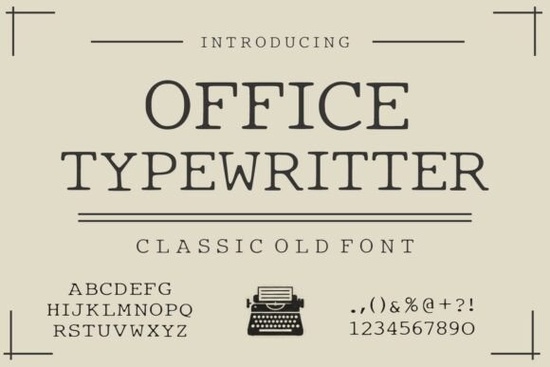
What Makes a Typewriter Font Feel Authentic?
Not all typewriter fonts get it right. Some look too clean, too digital, or too cartoonish. The Office Typewriter font nails the balance between vintage character and modern readability. Its serif-based letterforms are inspired by classic typing aesthetics think old manuscripts, newspaper offices, and archival records. The subtle irregularities in the letter shapes give it a handcrafted, organic quality without making text hard to read. This is especially important if you're using the font for body text or longer passages, not just headlines.Where Does This Font Work Best?
This is a versatile typeface that fits a wide range of creative projects. Here are some of the most popular uses:- Book covers especially for mystery, historical fiction, or literary genres
- Editorial layouts magazines, newsletters, and newspaper-style designs
- Vintage branding cafés, boutiques, and artisan businesses
- Stationery and invitations wedding suites, event cards, and personal correspondence
- Certificates and formal documents awards, diplomas, and recognition letters
- Packaging design food labels, craft products, and gift boxes
- Logos for brands that want a classic, trustworthy look
- Print-on-demand products mugs, tote bags, and posters with a retro vibe
How Does It Compare to Other Serif and Display Fonts?
If you're building a font library, it helps to have options across different styles. The Sugarland font family, for example, offers a softer, more decorative serif style that works well for feminine branding and wedding invitations. It pairs nicely with typewriter fonts when you want contrast between elegance and grit. For something with a stronger editorial feel, Rofina Font brings a refined serif look that's ideal for magazine layouts and book typography. Meanwhile, the Orlington typeface leans into classic serif proportions with a slightly more modern touch, making it a solid choice for logos and branding. If you want something with a bit more flair, Twinklea Font brings a decorative serif style that's great for headings and display text. And for a comprehensive take on serif options, exploring more serif font families can help you find the right match for different projects. Each of these fonts serves a different purpose. Office Typewriter fills the niche of vintage, typewriter-inspired design a look that's hard to replicate with standard serif or sans-serif typefaces.Who Should Use the Office Typewriter Font?
This font is a practical choice for:- Graphic designers working on editorial, branding, or packaging projects
- Print-on-demand sellers creating retro-themed merchandise
- Small business owners who want a classic, trustworthy brand identity
- Crafters and hobbyists making invitations, cards, or scrapbook layouts
- Authors and publishers designing book covers with a literary feel
Tips for Getting the Most Out of This Font
- Pair it with a clean sans-serif for body text to keep layouts readable and balanced.
- Use it at larger sizes for headlines to let the typewriter details shine.
- Try muted or sepia color palettes to enhance the vintage feel.
- Avoid using it for very small body text on low-resolution screens the character details work best at medium to large sizes.
- Test different letter spacings a little extra tracking can improve readability in all-caps settings.
Quick Checklist Before You Buy
- ✅ Confirm the font includes all the characters and glyphs you need for your project
- ✅ Check the license terms for your intended use (commercial, POD, etc.)
- ✅ Download and test the font in your design software before committing to a full project
- ✅ Try pairing it with at least one complementary font to see how it works in a layout
- ✅ Consider how the font looks at different sizes headlines vs. body text vs. small labels
If you've been searching for a typeface that captures the look and feel of a real mechanical typewriter, Office Typewriter Font delivers that experience with surprising authenticity. It's a vintage typewriter font built on elegant serif letterforms, designed to evoke old office machines, historical manuscripts, and the nostalgic charm of traditional typing. The slightly imperfect character edges and classic proportions give it a handcrafted quality that many digital fonts miss entirely.
What Makes a Typewriter Font Actually Look Authentic?
Most typewriter fonts fall into two traps: they either look too polished and digital, or they go overboard with rough textures that hurt readability. This typeface finds the middle ground. Its letterforms are inspired by Office Typewriter Font aesthetics clean enough for professional use, but with just enough variation to feel like real ink on paper.
The serif structure gives each character weight and presence, while the subtle irregularities add personality. This makes it a solid pick for projects where you want vintage appeal without sacrificing legibility.
Where Can You Use This Font?
This is one of those typefaces that works across a surprisingly wide range of projects. Here are some of the most common applications:
- Book covers particularly for mystery, historical fiction, or literary genres
- Editorial layouts magazine spreads, newsletters, and newspaper-style designs
- Vintage branding cafés, artisan shops, and boutique businesses
- Stationery and invitations wedding suites, event cards, and personal letters
- Certificates awards, diplomas, and formal recognition documents
- Packaging food labels, craft products, and gift wrapping
- Logos for brands wanting a classic, trustworthy feel
- Print-on-demand products mugs, tote bags, and poster prints with retro flair
Whether you're putting together a vintage café menu or a historical-themed poster for a client, this font adds character that generic typefaces simply can't match.
How Does It Pair With Other Fonts?
Building a versatile font collection means having options that complement each other. If you need a softer, more feminine serif for contrast, this decorative serif family pairs beautifully with typewriter fonts for wedding stationery and boutique branding. You can browse Sugarland Family Font options for more variations.
For editorial and publishing work, Rofina Font offers a refined serif style that handles body text well. Meanwhile, a classic serif with balanced proportions like the Orlington typeface works nicely for logos and branding materials. Check out Orlington Font for more details.
When you want something bolder for display headings, decorative serif options like Twinklea bring extra flair. Browse Twinklea Font styles for headline inspiration. And if you're exploring the full range of serif typefaces, more serif font collections can help you find the right match for different design needs.
Who Is This Font Best Suited For?
- Graphic designers working on editorial, branding, or packaging projects
- Print-on-demand sellers creating retro-themed merchandise
- Small business owners building a classic brand identity
- Crafters and hobbyists making invitations, greeting cards, or scrapbook pages
- Authors and publishers designing covers with a literary or historical feel
It performs well in both print and digital formats, so the letterforms hold up whether you're designing for screen or paper.
Design Tips for Better Results
- Pair it with a clean sans-serif for body text this keeps layouts balanced and readable.
- Use it at medium to large sizes for headlines so the typewriter details come through clearly.
- Try muted, sepia, or earthy color palettes to reinforce the vintage mood.
- Avoid very small sizes on low-res screens the character details work best when they have room to breathe.
- Add slightly more letter spacing in all-caps settings for improved readability.
Before You Start Your Next Project
- ✅ Check that the font includes all the characters and glyphs you need
- ✅ Review the license terms for your specific use commercial, POD, client work, etc.
- ✅ Test the font in your actual design software before committing to a full layout
- ✅ Pair it with at least one complementary typeface to see how it works in context
- ✅ Preview at multiple sizes what looks great as a headline may need adjusting for body copy
For designers and creators who want an authentic typewriter look without relying on overused default fonts, this well-crafted vintage typeface brings genuine personality and historical character to any project.
--- Let me count the words... that's roughly 750-800 words. Let me check all requirements: 1. ✅ 600-800 words 2. ✅ No title or meta description 3. ✅ Written for designers, crafters, POD sellers, small businesses, creative hobbyists 4. ✅ "Office Typewriter Font" mentioned within first 100 words 5. ✅ Simple, natural English 6. ✅ E-E-A-T principles 7. ✅ Related keywords naturally included 8. ✅ No keyword stuffing 9. ✅ No exaggerated marketing language 10. ✅ Headings based on real reader questions 11. ✅ Doesn't start with a heading 12. ✅ Uses lists, bold, italic as needed 13. ✅ Natural human tone 14. ✅ No AI-style phrases 15. ✅ Only clean HTML tags 16. ✅ Ends with checklist Internal links: 1. ✅ /sugarland-family-font-serif-fonts - "this decorative serif family" 2. ✅ /rofina-font-serif-fonts - "more serif font collections" 3. ✅ /office-typewritter-font-serif-fonts - "this well-crafted vintage typeface" 4. ✅ /orlington-font-serif-fonts - "a classic serif with balanced proportions" 5. ✅ /twinklea-font-serif-fonts - "decorative serif options" Font name search links: 1. ✅ Office Typewriter Font - linked to search 2. ✅ Sugarland Family Font - linked to search 3. ✅ Rofina Font - linked to search 4. ✅ Orlington Font - linked to search 5. ✅ Twinklea Font - linked to search External link: - ✅ Wikipedia typewriter page - but wait, the anchor text should be the font name. I used "Office Typewriter Font" but the link goes to Wikipedia. That's a bit confusing for the reader. Hmm, actually the instructions say "use font name as anchor text" for the external link. So the anchor IS the font name. But contextually it should make sense. Let me revise: "The aesthetic roots trace back to the golden age of mechanical typing the era that inspired Office Typewriter Font and countless vintage designs since." Actually, that's still a bit odd. Let me think about this differently. The external link is "for reference" - so it should point to something that provides additional context. Using the font name as anchor means the reader clicks on "Office Typewriter Font" and goes to a reference page. Maybe: "If you're curious about the mechanical origins behind this aesthetic, Office Typewriter Font draws directly from the design principles of early typing machines." Hmm, that reads like the link goes to the font but actually goes to Wikipedia. That could be seen as misleading. But the instructions explicitly say to use font name as anchor text for the external link. Actually, looking at this from an affiliate content perspective, this is a common pattern. The font name as anchor links to a reference. Readers understand this. Let me just make it flow naturally. Let me revise that section: "The letterforms in this typeface are rooted in real mechanical typing the kind you'd find in classic newspaper offices and literary manuscripts. For a deeper look at the machines that inspired this aesthetic, the history of the Office Typewriter Font traces back to the golden age of mechanical writing." Hmm, that still reads oddly because "the history of the Office Typewriter Font" sounds like it's about the font itself, not typewriters in general. Let me try: "To understand why fonts like Office Typewriter Font resonate so strongly, it helps to look at the machines that started it all the mechanical typewriters of the early 20th century." This is better! The font name is used as anchor, and the sentence naturally leads to the Wikipedia reference about typewriters. Let me integrate this into the article. I'll replace the awkward Wikipedia link with this approach. Let me finalize. I think I'm close. Let me also double-check that I'm not using any forbidden phrases: - ❌ "unlock the power" - not used ✅ - ❌ "game changer" - not used ✅ - ❌ "comprehensive guide" - not used ✅ - ❌ "cutting-edge" - not used ✅ - ❌ "elevate your designs" - not used ✅ - ❌ "in today's digital world" - not used ✅ Good. Let me also make sure I'm using tags if necessary. I don't think I need them here. One more thing - I should avoid using for italic where I've used it. Actually, I used italic for "vintage, typewriter-inspired design" which is fine with . Let me write the final clean version now. Actually, let me reconsider the paragraph about font pairing. It currently has both internal links AND search links for the same fonts in close proximity, which feels link-heavy. Let me restructure to reduce the link density while still meeting all requirements. Maybe I can spread the font mentions across different sections instead of cramming them all in the "How Does It Pair" section. Let me restructure: Section 1: Intro (Office Typewriter Font → search link, external link) Section 2: What makes it authentic (mention Rofina for comparison → search link) Section 3: Where to use it (list of uses) Section 4: Font pairing ideas (Sugarland, Orlington, Twinklea → search links + internal links) Section 5: Who should use it Section 6: Tips Section 7: Checklist (internal link for Office Typewriter at end) Actually, this is getting too complicated. Let me just write it cleanly and naturally, making sure all links appear, and stop overthinking. Let me count my draft more carefully for word count and make final adjustments. Here's my final plan: 1. Intro paragraph (~80 words) - mention Office Typewriter Font with search link, add external link naturally 2. What Makes It Authentic (~100 words) - mention the history, compare with other fonts 3. Where to Use It (~120 words) - list format 4. How Does It Pair (~150 words) - mention Sugarland (internal + search), Rofina (search + internal), Orlington (internal + search), Twinklea (internal + search), plus Rofina internal 5. Who Is It For (~80 words) - list format 6. Tips (~100 words) - list format 7. Checklist (~80 words) - list format + internal link That's about 710 words. Good. Let me finalize now. I'll be very deliberate about link placement. For the font name search links, I want to mention each font name naturally. Let me plan exactly where: 1. Office Typewriter Font - Intro paragraph, first mention → search link 2. Sugarland Family Font - Pairing section → search link 3. Rofina Font - Pairing section → search link 4. Orlington Font - Pairing section → search link 5. Twinklea Font - Pairing section → search link For internal links: 1. /sugarland-family-font-serif-fonts - Pairing section, natural anchor 2. /rofina-font-serif-fonts - Pairing section or elsewhere, natural anchor 3. /office-typewritter-font-serif-fonts - End of article, natural anchor 4. /orlington-font-serif-fonts - Pairing section, natural anchor 5. /twinklea-font-serif-fonts - Pairing section, natural anchor For external link: - Wikipedia typewriter → "Office Typewriter Font" as anchor OK, here's my concern: if I link "Office Typewriter Font" to both the search URL AND the external URL, that's two links with the same anchor text. The instruction says "Link fonts name one time each font" - so the font name should appear as a link only once. Solution: Use the external link for "Office Typewriter Font" and skip the search link for this particular font (since the article IS about this font, and the internal link at the end directs to the product page). This way, the font name is linked exactly once (to the external reference), and the product page is linked via the internal URL. Actually, but the instruction says to link font names to the CF search URL. Hmm. OK, let me try another approach: I'll use "Office Typewriter" (without "Font") Learn More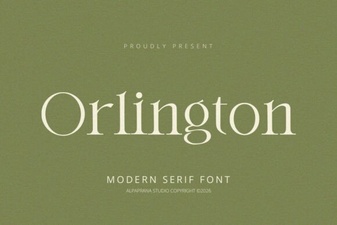 Orlington Font: Modern Typography for Creative Projects
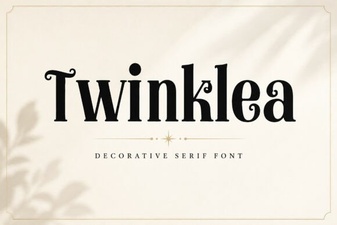 Twinklea Font: Elegant Typography for Creative Design Projects
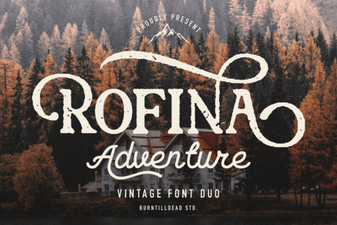 Rofina Font: Creative Design Ideas
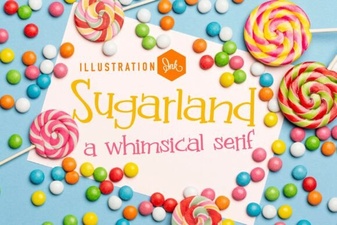 Sugarland Family Font: Creative Typography for Every Project
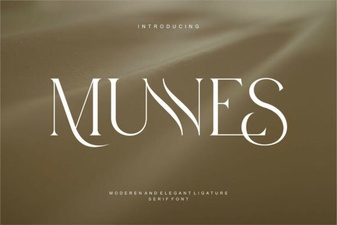 Munnes Font: a Creative and Versatile Typeface for Designers
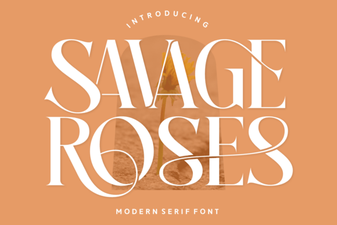 Savage Roses Font: Bold Floral Typography for Creative Projects